
By: Mike Perry
In the cluttered world of social media, with its cruel and ever-shifting algorithm, brands are losing out when it comes to creating social moments and forging genuine connections with consumers.
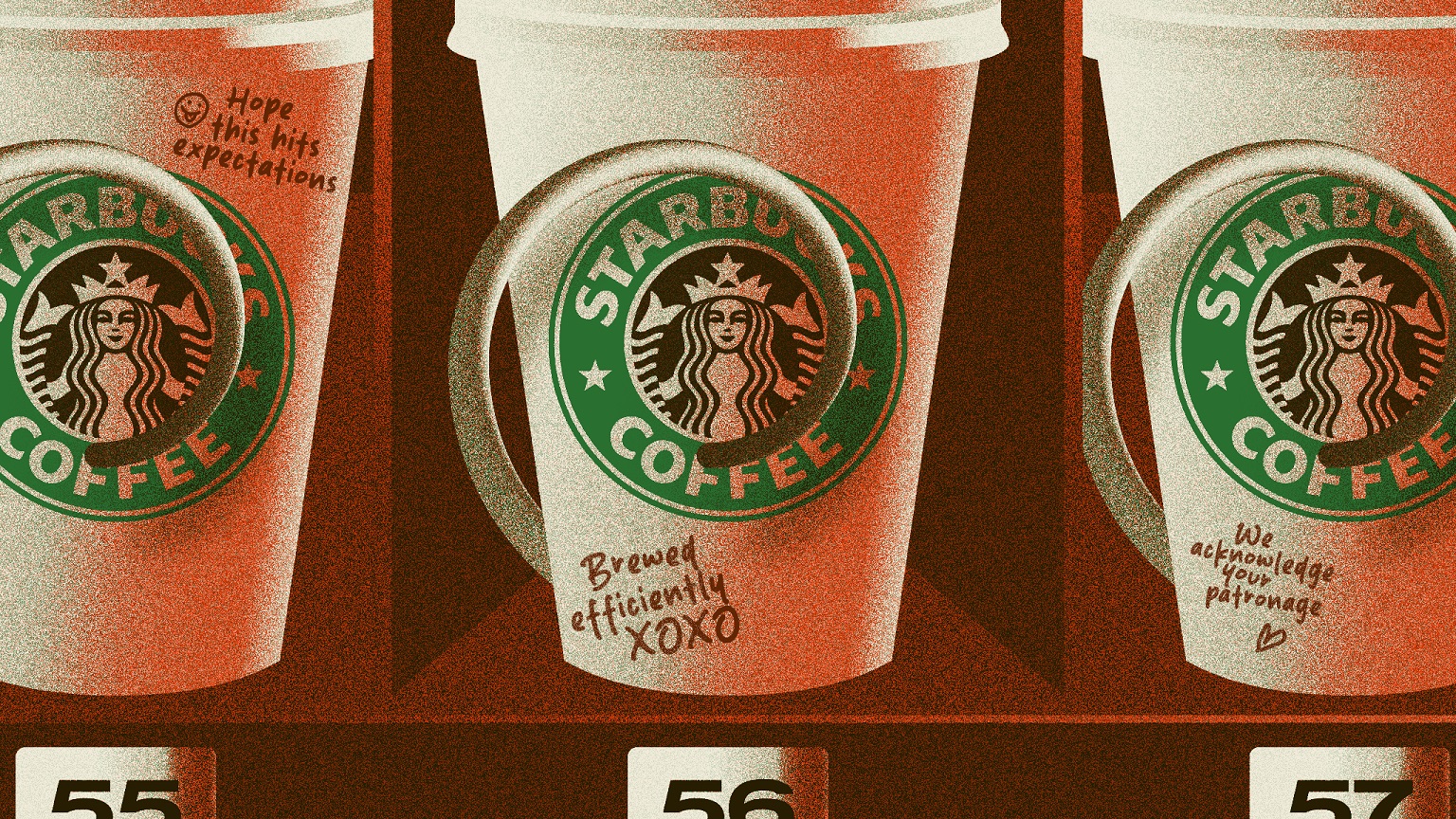
Starbucks, however, might have figured it out.
Well, they might have re-figured it out.
Facing lagging sales, the brand tasked baristas with writing simple, personalized messages on every customer’s cup (not to mention a tightened-up dress code). Sure, it’s a boon for marker manufacturers everywhere, but it’s also a move that speaks to how un-personalized and soulless mobile ordering has become. Starbucks wants to be your local coffee spot, but to bring customers back, they needed to go back to basics, and that meant extra-step hospitality.
Viral moments, pointless collabs, and celebrity endorsements have successfully overshadowed a fundamental truth: people crave authentic human interaction. They want to feel a sense of belonging. And as it turns out, many of these folks have lost sight of the soul of service.
In Starbucks’ case, the coffee giant lost its way by prioritizing efficiency and mobile ordering to the point of becoming nothing more than an oversized vending machine. While I have multiple millennial friends that are still diehard Starbucks customers, even for them, the experience is drastically lacking. You walk in, scan your phone, grab your lukewarm coffee that’s been sitting out, and you’re gone. Where’s the connection in that?
Starbucks tasking baristas with writing personalized messages on cups and a tightened dress code might seem minor, but it’s a move that speaks volumes and takes them back to their roots. In the race to optimize and get people in and out the door as quickly as possible, they stripped out what makes a local coffee spot so special: the human touch. It’s a critical extra step that reclaims the brand’s heritage in hospitality.
Grand gestures are unnecessary, but the extra step? That’s essential, and it can turn a transaction into something much more meaningful.

Hospitality is lousy with examples, but think about the warm, inviting scent of a Doubletree cookie upon check-in or the nostalgic delight of an In-N-Out paper hat given to a child. Chick-fil-A will beat you over the head with courtesy and the consistently polite refrain of “my pleasure.” But these aren’t just perks or forced warmth; they are intentional, branded moments that build genuine affinity and loyalty.
So, why have so many brands strayed from these roots and the very thing that made them so beloved in the first place?
In the pursuit of cost-cutting and scale, many QSR and fast-casual establishments have become sterile boxes. Look at Chipotle—it’s a glorified cement box with a few wooden accents devoid of pleasantry. It’s a grim lunch experience, to say the least.
When you strip out the human element and champion efficiency, what are you left with? In a landscape drowning in on-demand food from an endless array of vending machines, what’s the differentiator? If one is served with a smile, you’re going to think it tastes better. It’s that simple. Just last month, my own mother’s hometown Starbucks, where she has been a daily customer for years, wrote “customer of the week” on her cup, and she went out of her way to tell her son in branding about that moment.
The general lack of human interaction and over-reliance on technology and apps has turned most customer experiences into nothing more than an exchange of money for goods. It’s certainly more convenient, but it can’t replace the importance of the human touch. Ad-man Rory Sutherland often uses the example of a doorman at a hotel and how procurement might instruct you to get rid of a doorman because of the cost savings. But a doorman is never just a doorman. That hotel might now save $60,000 a year, but they have lost the image of someone who presents an air of luxury—the smiling IRL human being who greets you warmly, hails you a cab, and most importantly, makes you feel like the establishment is safe and secure. It’s under the doorman’s watchful eye, after all.
For Starbucks and its ongoing financial struggles, pivoting back to hospitality was an absolute must, and despite another bad quarter, they’re not backing down from greeting people with a smile.
Coupled with potential impacts from tariffs on coffee and consumers tightening their spending, relying on premium pricing alone wasn’t enough—the entire experience needed to be premium. Starbucks, similar to Dutch Bros, isn’t just in the coffee business; it’s a beverage company. Gone are the days when you just grabbed a coffee or a latte. Now, they’re heavily focused on offering indulgent treats, colorful refreshers, or blended drinks that appeal to a broader audience, much like Dutch Bros has done with their over-the-top mochi berry shakes and frozen creamy espressos. While I have no desire to spike my blood sugar levels, I’m legitimately fascinated by Dutch Bros’ success and their ability to attract a loyal following with these hedonistic and sometimes Lisa Frank-adjacent concoctions. Couple that with stellar service, and you can see how they’re thriving with their drive-thru-only model. Because just like Chick-fil-A, they anticipate your journey and provide a hospitable experience—even in a parking lot. It’s about a human exchange, not tech.
Ultimately, brands must stop the race to the bottom. Premiumize the experience, not just the product, and you’ll have a customer for life.
As marketing guru Seth Godin often says, you need to give your consumer a gift. The product itself isn’t the gift; it’s that extra something. It could be a personalized message, a warm cookie, a friendly doorman, or even a silly paper hat that your kid wears for the rest of your vacation. Gift-giving is the extra step that makes the consumer feel seen, valued, and special.
In an era where every brand is competing for attention, the simplest and most effective way to stand out is to simply go back to basics. And that means investing in hospitality. It might cost a few extra bucks—and your procurement department might balk—but the return in brand affinity and loyalty will be tenfold. Because when you strip out the heart from your brick-and-mortar experience, you’re not just losing sales; you lose all connection. And without those connections, what’s a brand truly worth?
Source: Tavern
You must be logged in to post a comment Login