
How Sainsbury’s acted early to narrowly avoid £3m in damages in one day
UK retailers are facing mounting financial pressure from climate-related disruption, with flooding emerging as a growing risk to store operations, supply chains and availability.
A run of extreme weather events in recent years – including storms Dudley, Eunice and Franklin – has already forced store closures, damaged stock and disrupted distribution across the UK, costing businesses millions. With insurers predicting that storm costs from 2022 will total over £500m, the scale of the disruption can’t be ignored.
Despite this, much of the industry response remains reactive.
Flood damage to non-residential properties is projected to rise by up to 44% by 2100, while the wider economic impact of climate change is expected to reach at least 1% of GDP by 2045. For grocery retailers operating high-volume, time-sensitive supply chains, the commercial risk is becoming increasingly difficult to absorb.
At the same time, businesses are continuing to invest heavily in climate reporting, with estimates suggesting an average spend of £100,000 to £200,000 on compliance-led assessments. However, these reports often fail to translate into practical, site-level action.
The result is a growing disconnect between insight and operational response.
For retailers, this gap can quickly translate into lost sales, wasted stock and disrupted availability –particularly during periods of peak trading or severe weather. This challenge is already playing out across major UK store estates.
In 2022, Sainsbury’s identified flooding as an increasing operational risk following repeated disruption linked to severe weather. Previous incidents had led to store closures and stock losses, highlighting the limitations of reacting after events had already begun.
During a period of severe weather linked to Storm Eunice, one store was identified as being at high risk of flooding, with weather warnings often arriving too late. Without sufficient lead time, the site faced the prospect of extensive damage and prolonged closure.
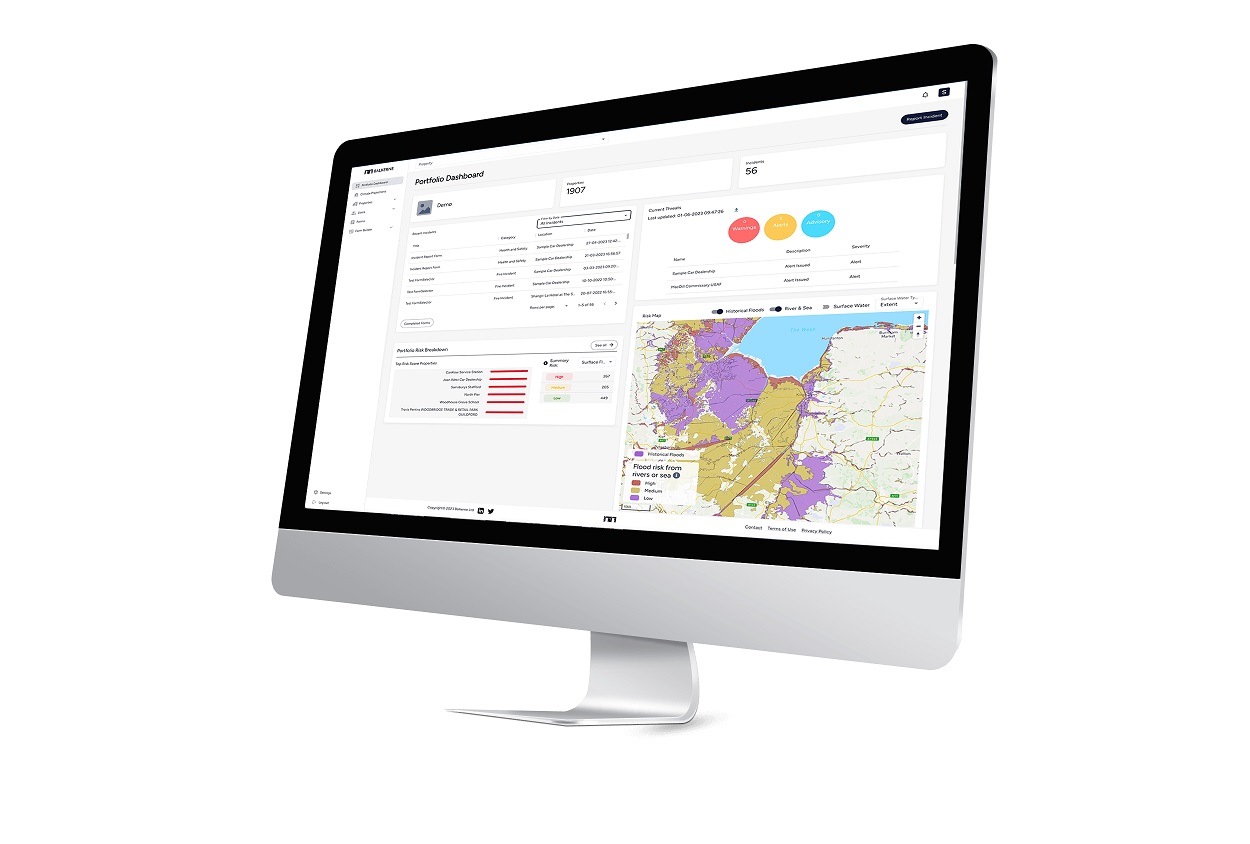
However, using SmartResilience’s real-time monitoring platform, store teams received a site-specific alert 12 hours before the event, seven hours ahead of the Environment Agency warning. The alert identified the flood severity and triggered a pre-built operational plan: which stock to move, which access routes to close and when to deploy flood defences. This enabled staff to act quickly and minimise disruption ahead of impact.
Thanks to the quick action, the store reopened quickly and saved an estimated £3 million in flood-related losses from that one location alone. Across its entire estate, the disruption had the potential to be catastrophic.
The example highlights a broader shift underway across grocery retail, from retrospective reporting towards more proactive, operational resilience with a direct line to profit and loss.
SmartResilience combines live weather data, river levels and long-term climate modelling to provide early, site-specific warnings of flooding risk. Rather than relying on broad regional forecasts, the platform delivers localised alerts designed to support on-the-ground decision-making.
Founder Harish Pesala said the issue for most retailers is not a lack of data, but a lack of usable insight: “Retailers are already feeling the impact of climate disruption, whether that’s store closures, stock loss or supply chain delays.
“The challenge has been turning complex climate data into something that can actually be used at store level. When teams have early visibility of risk, even a few hours can make a significant difference to protecting stock and maintaining operations.”
The commercial impact is already being seen. Alongside the £3 million avoided losses at Sainsbury’s, a FTSE 100 business has used the platform to identify and mitigate more than £70 million in climate-related risk over a ten-year period.
For grocery retailers, the implications extend beyond individual sites. Supply chain disruption, availability challenges and rising insurance costs are all adding pressure to already tight margins.
With insurers tightening terms and increasing premiums, there is growing emphasis on demonstrable risk mitigation – particularly for large estates and distribution networks.
Keith Weed, Chair of Sainsbury’s CSR Committee, said of the package of climate resilience measures: “This will help us create more resilient supply chains that can better withstand the shocks of climate change and the nature crisis. It will be key to our success in making good food accessible and affordable for all”*
As extreme weather becomes more frequent, the cost of disruption is rising and so too is the expectation that retailers take a more proactive approach.
For many in the sector, the question is no longer whether climate risk will impact operations, but how quickly they can respond when it does.
*Source – Sainsbury’s Plan For Better Report 2024/2025
Source: SmartResilience
You must be logged in to post a comment Login