
Ceremony Botanical Brewing Introduces a New Beer Category Based on Botanicals and Aimed at Cultural Authenticity and Community Building
The Many, the independent, Los-Angeles based, full-service advertising agency that specializes in participatory marketing has launched Ceremony Botanical Brewing, the first botanical brewing company in the United States and the first to build every brew from the ground up around a single botanical rather than by adding ingredients to an existing recipe.

“We’ve created a brand-new craft-beer category, where the botanical is the product and the beer is the vessel,” said Jens Stoelken, a co-founder of The Many and a 20-year industry veteran across spirits, beer, energy drinks and non-alcoholic beverages.
The business is the result of the unique and complementary business experiences of The Many’s co-founders. In addition to Stoelken’s decades in the beverage industry, the brand is blessed with a stunningly effective visual identity, packaging and brand universe created by agency co-founder Blake Marquis, the architect of the agency’s brand design and packaging capability. Marquis serves as Ceremony’s brand manager, designer and brand architect, working without the guardrails of a client brief or marketing discipline constraints.
Chief among the branding priorities was authenticity. Ceremony was conceived and created by omnivorous beer and spirits enthusiasts and launched at a loud and free social event at Hi Sign Brewing, 730 Shady Lane in East Austin―a hugely popular, veteran-owned craft brewery and taproom. Two inaugural releases of the brand line-up―the Matcha Botanical Pilsner and the Hibiscus Botanical Ale Ceremony―will be available to the public during its unusual residency model at Hi Sign.
“Ceremony is not a flavored beer,” said Stoelken. “It is not a beer brand. It is something that does not yet have a category name, and that gap is the point. Mass beer has been losing younger drinkers not because that demographic stopped wanting to gather around something but because mass beer stopped giving them a reason to. Gen Z, the most participatory generation in the culture, gravitates toward brands with stories, ingredients with histories and experiences that mean something. Ceremony is built from that observation.”
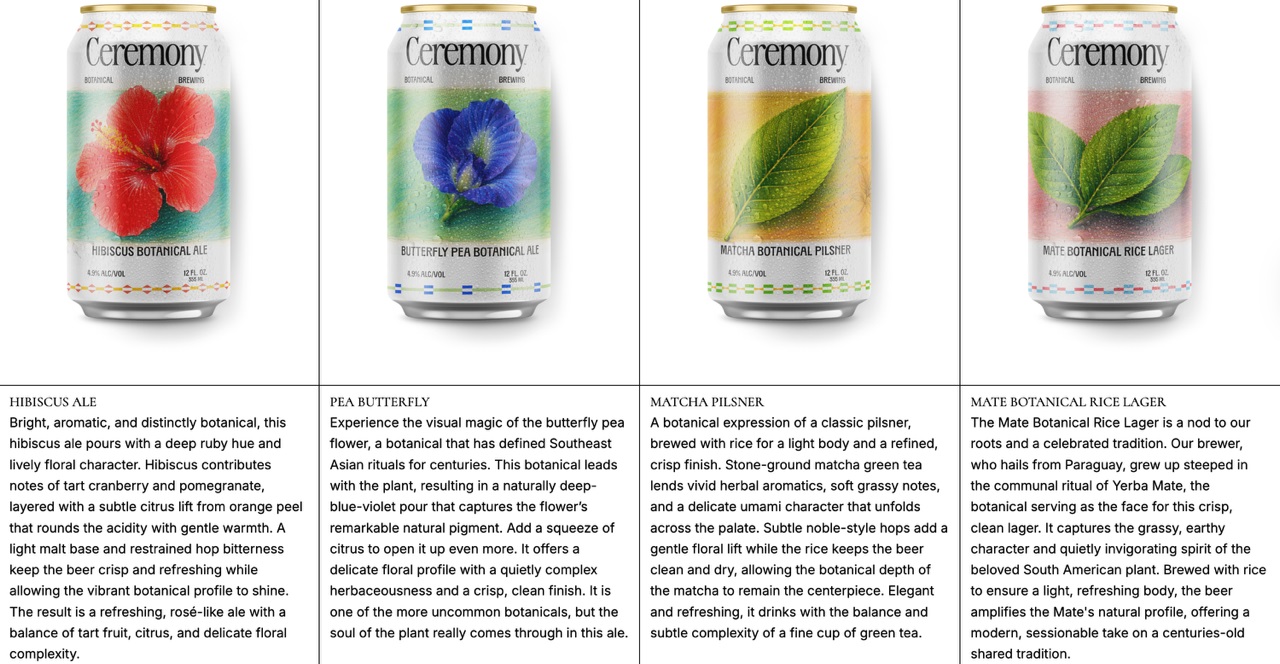
Stoelken grew up in Germany, immersed in beer’s deep ties to heritage and identity. He developed the Ceremony Botanicals concept in 2024 after tasting a matcha beer at Kyoto Brewing Company while traveling in Japan. Each brew starts with a botanical chosen for its centuries-long history as a catalyst for community building: matcha from the Japanese tea ceremony, hibiscus from the communal drinking traditions of Mexico, West Africa, and Egypt, and mate from the South American ritual of passing the gourd. Ingredients were chosen by cultures over time to mark moments that matter, Stoelker said.
The brand architecture reflects that authenticity across every touchpoint. “The brand identity announces a beer brand immediately distinct from conventional craft beer (a struggling category) and functional wellness beverages (a growing one),” Marquis said. “The design communicates that this is not some flavor-extension brand or a novelty botanical gimmick. It says that Ceremony is an intentional drinking experience rooted in ritual, ingredient reverence and cultural meaning.”
Ceremony’s goal, the co-founders say, is to own the space where social, functional and cultural drinking overlap and engage with consumers who are health-conscious, socially engaged and culturally curious.
The Ceremony wordmark plays a major role in signaling the brand positioning, with an elegant, almost literary quality that feels elevated, timeless and intentional. It does not read as rugged, industrial or contemporary in an overplayed tech-wellness pitch. Ceremony is balancing several tensions: old and new, cultural and modern, beer and botanical, social and intentional.
Color does not play a decorative role in the Ceremony design system, which leverages white space liberally. Color is used to create mood and differentiate ritual experience by botanical. Typography contributes to the ritual feeling of the package. It slows down the reading experience and makes the can feel designed and intentional rather than flatly commercial. The colors reinforce the strategic tension of the brand packaging: elevated and design-forward but clearly functional.
Graphics of the botanical ingredients are rendered in a tactile, hand-drawn, colored-pencil style, with visible texture, subtle imperfection and a sense of close observation. This communicates care, humanity and faithfulness to the ingredients, a throwback to the traditional fine-artist’s notebook. Packaging design is based on a single ingredient centered as the focal point and given scale, space and visual priority. Illustrations are built around a single hero botanical shown at scale. The product story begins with the botanical, not the beer style.
The Many has spent 15 years helping brands become more participatory, building with audiences rather than at them, and finding the cultural rituals people already gather around and giving brands a meaningful role inside them.
“Ceremony is what happens when there is no brief and no existing category to fit into,” Stoelken said. “It is not a demonstration of the methodology. It is the methodology, running all the way to the ground. Younger drinkers are looking for ingredients they already love and experiences that feel intentional. We are offering what beer becomes when the botanical is the whole point.”
In addition to the first two brews, the Matcha Botanical Pilsner and a Hibiscus Botanical Ale (both at 4.9% ABV), a Butterfly Pea Botanical Ale and a Mate Botanical Rice Lager will soon follow. For more information, visit: https://ceremonybotanicalbrewing.com/
The Ceremony brand residency at Hi Sign Brewing, Austin.
Source: The Many
You must be logged in to post a comment Login